Showing posts with label books to read before you die. Show all posts

Thursday, February 6

How to enjoy a clockwork orange

Sometimes I shy away from BIG books with BIG statements. Think dystopian classics like 1984, Brave New World and The Handmaiden's Tale.  How can I enjoy a book that isn't meant for pure entertainment?  

I've found dystopian novels daunting in the past because they aren't meant for pure entertainment like so many books.  I've had to learn to slow down my consumption of entertainment in order to unlock pleasure in expanding my perspective.  

I read A Clockwork Orange.  I would like to make one thing clear before I continue: It is written amazingly.  I did enjoy it immensely as a piece of great writing aside from its content.  

And then when you add the story and themes...  Well.  Even as an anti-hero, main character Alex was still someone I could empathise with.  Through his journey I experienced a journey of learning too.

Expanded consciousness

I'm unsure if this reading experience changed my mind or if what it prompted in me was rather the ability to hold onto several different ideas without having to settle for one "true" one.  My understanding of notions like free will and freedom was certainly challenged.  Through Alex I gained insight into a perspective that resonated with me.

What then remained was for me to engage in reflection, link and connect these ideas with things around me - things I saw on tv and read in other books - and thus employ this expanded consciousness in my life.  

Damaging self-doubt

When I started reading A Clockwork Orange, I worried that my "enjoyment" would be damaged by the pressure of having to gain something from the reading.  If it's provoked so much debate over the decades, there's surely some deep stuff in there I need to understand, I reasoned.  I was daunted by the thought that I wouldn't be able to glean anything from it, and therefore be less of a reader.  

As it turned out, learning was the part I enjoyed THE MOST 

I misplaced my fears as I fell into step with the great writing.  Because I was immersed in the reading of a story, the BIG ideas that I was so daunted by came naturally to me.  This taste of learning was invigorating.

When I finished reading, I felt a deep sense of achievement.  There is something fantastic about reading a book that teaches new ideas, as if it was more than a book.  My experience was like walking out of an optometrist with new glasses - what I saw was the same old, but my perception was clearer, more informed, more vibrant.  

This thrill is something I am becoming addicted to.


Reading A Clockwork Orange was an exercise in enjoying the process of learning.  The expanded consciousness I gained within its pages has made me excited to seek new ideas and perspectives.  

Wednesday, January 1

What We Read: 2013


It has been a huge year for my reading-life.  I've branched out way more than ever and had a terrific time.  Here is my 2013 book list  plus the year's Highlights and Lowlights.  

What We Read 2013:
  • Harry Potter and the Deathly Hallows by J. K. Rowling
  • The Casual Vacancy by J. K. Rowling
  • Mr Penumbra's 24 Hr Bookstore by Robin Sloan
  • The Secret of Chimneys by Agatha Christie
  • Tom's Midnight Garden by Philippa Pearce
  • Frankenstein by Mary Shelley
  • Dracula by Bram Stoker
  • The Perks of Being a Wallflower by Stephen Chbosky
  • Mateship with Birds by Carrie Tiffany
  • The Adventures of Tintin Volumes 1 - 7 by Hergé
  • Atonement by Ian McEwan
  • Enduring Love by Ian McEwan
  • The Cement Garden by Ian McEwan
  • Amsterdam by Ian McEwan
  • The Invention of Hugo Cabret by Brian Selznick
  • Sin City: The Hard Goodbye by Frank Miller
  • The Adventures of Tarzan by Edgar Rice Burroughs
  • The Man Who Fell to Earth by Walter Tevis
  • White Teeth by Zadie Smith
  • This is How You Lose Her by Junot Diaz
  • Trainspotting by Irvine Welsh
  • Cloudstreet by Tim Winton
  • Dune Messiah by Frank Herbert
  • Esio Trot by Roald Dahl
  • Tampa by Alissa Nutting

Lowlights:

These are the books I didn't enjoy and would not read if I went back in time.  Forgive me if any of these are your favourites!  

Amsterdam by Ian McEwan is talked up a lot, especially as a past Booker prize-winner.  However I  guessed the plot twist almost as soon as the characters were introduced so it was a big anti-climax.  Ultimately it's no more than a hiccup in my longterm love affair with McEwan as a writer.  

Mateship with Birds by Carrie Tiffany was the 2013 winner of the Stella Prize for Australian women's fiction.  The tone and mood feel like an imitation of Tim Winton's work.  Besides being unsatisfying and offering no room for empathy with the characters, I felt it portrayed a poor ideal of what it means to be Australian.  

Highlights:

These are the books that made me think and feel, new favourites to revisit forever.  

The Casual Vacancy by J. K. Rowling is so different from her other work, but incredibly thought-provoking.  It is an edgy and often confronting read with a good pace driven by character and plot development.  Notions of privilege, justice and family are challenged by this depiction of truth.  

The Perks of Being a Wallflower by Stephen Chbosky had a huge resurgence in 2013 due to the release of its film adaptation.  It's a young adult fiction that tackles some controversial and topical subjects, while at the same time reopening timeless ideas of love, family and identity in a way that guarantees its status as a contemporary classic.  It's emotionally engaging and memorable.  

Atonement by Ian McEwan is an epic masterpiece that redefined my standards for fiction.  It is sensationally well written.  Its tragically beautiful plot left me hopelessly moved. 

White Teeth by Zadie Smith is a brilliant début.  It is sassy and cunning, memorable for its wit and ingenious way of tying up threads.  It also boasts one of the most engaging openings to any novel I've read.  

Trainspotting by Irvine Welsh is grit and filth and so much fun.  Unique in every way, the genius of this confronting little book cannot be silenced.  The prose is addictive.

Cloudstreet by Tim Winton is an Australian classic that I feel pristinely defines what it means to be alive.  This book is written with love and pain, and the magic and earthiness of its prose will colour its reader's perception of life.  It is an experience and a supreme gift of literature.  


So thankyou for coming along on my reading adventures.  Hopefully we'll have the opportunity to recommend each other plenty of great new reads for 2014.  


Friday, December 6

Review: Cloudstreet

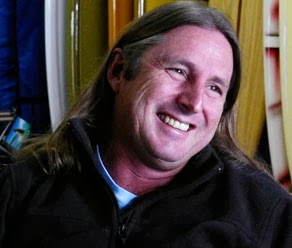
Tim Winton's modern classic Cloudstreet is unavoidably a masterpiece. But unlike the works that we normally associate with the esteemed "M word", it isn't prim, cold and correct.  

This book is life and grit and salt and sweat.  It is the dirt you build a home on and it is a gift.  


Source: au.news.yahoo.com
My aim in writing this review is to acknowledge the impossibility of summing this book up.  How can I possibly describe a book that has changed my life?  It's futile trying to give you my experience in a nutshell when you can only really know by experiencing it yourself.  

So this is really a lousy stab at revealing my heart. 


Cloudstreet is deliciously well-written.  I read it in a state of constant swoon.  Tim Winton treats Australia like rare magic, and now the sky and earth appears to me imbued with dreams.  

The book is life.  I've never been so shocked and so upset.  Great sadness sits beside great happiness in its swelling tide.  It was real for me, every bit.  

When I finished reading it, all I could do was weep and hold the book tight against my chest.  I felt that for the first time, I had been given a piece of life and hope all my own.  It is a gift I didn't feel worthy to receive, but no one can take it from me because now Cloudstreet is in my veins.  

I never felt alone reading it.  This is a book that deserves to be read in community and togetherness, to be shared and talked about until you're forced to admit that you could never get to the bottom of it. It is an individual and communal experience.  


Cloudstreet for me is an epiphany of what it is to love.  What is it to be a family? And what is home - people or places?  Within it's pages I found an indescribable surety I was alive.  

Thursday, December 5

The X-Ray Car

Tim Winton pounces on his unsuspecting reader with gorgeous passages like this one:

They came home from the river one day to find Lester Lamb waiting for them on the bonnet of an ancient Rugby, dressed in his threadbare suit and gorgeously pleased with himself.  He showed them the car.  It was a dusty, black old banger with tyres smoother than a baby's bum and rust beneath the paint like a spreading cold sore.  He showed them every angle, every virtue, including the side-blinds he's made himself from old X-rays which gave a curious effect of mortality to an afternoon drive: you saw the world through compound fractures, you saw the river in an old soldier's lungs, sky through the skulls of shellshocked corporals.  
It's yours, he said, you need a car.  
We need a car, said Quick.
But this is more than a car, said Rose, it's an experience.

Tim Winton.  1991.  Cloudstreet.  Viking.  p 359.

I found this startlingly beautiful, the last thing I expected to hear and forever memorable.  His imagination is sacred to me.  How does he produce things like this?  

Cloudstreet is so teeming, chockablock full of his insanely beautiful images.  Having finished the book, I hold it now with reverence, unable to escape the feeling that I am holding something living, breathing and invaluable.  

Please watch out for my concluding review of Cloudstreet!

Thursday, November 21

Tim Winton: License to Shock

You want to cover your eyes but you've already seen.  Before you even realise that something is amiss, it's too late to do anything. 

We are reading Tim Winton's modern classic Cloudstreet.  There's this thing that he does in his writing that I find shocking.  I have to talk about it because it's the first time I've experienced something like this in writing.  


The power to shock

Tim Winton keeps shocking me.  We are unsuspecting passers-by, innocently enjoying the scenery.  The same second that we first feel the prickle of something going wrong, it is too late to prevent the tragedy.  

We are now the witness of a horrific accident.  We am scarred.  We would have closed our eyes or run away if only we had known.  But now the trauma of the characters is in part our own.  I am Quick Lamb.  


To resume life

These moments always occur in the middle of a chapter.  This is such a powerful technique.  We become the characters who cannot stop, cannot hide from what they have experienced.  We are forced to continue living the chapter.  There's no time to grieve, only room for moving forwards.  

**SPOILER ALERT**  Quick Lamb witnesses the death of Wogga McBride and because he doesn't tell anyone, he has no choice but to act as though nothing out of the ordinary happened.  This terrible trauma and tension belongs to the reader as well, unable to do or change what we've read, we just keep reading.

In this way, the book mirrors life.  To read Cloudstreet is to experience  life in miniature.  It is not a passive viewing experience, but a forced participation in life.  I will be haunted by every word.


Tuesday, July 30

15 Books all Children Should Read

I thought I would challenge myself to come up with my top 15 children's books.  It's no mean feat deciding the order of these books since I love them all so much, but I'll give it a go.  This list could easily be pushed to a top 50 in the future, but I think this is a good start for now.  


15.  The Adventures of Tom Sawyer by Mark Twain

This book is a riotous adventure, and one of the great American novels.  It features many misadventures, all of which are extremely memorable and tinged with humour.  


14.  Black Beauty by Anna Sewell

Told by Black Beauty himself, this story is sad but very sweet.  


13.  Watership Down by Richard Adams

Richard Adams once said that he wanted to write a "proper adult book" for children.  This book is an adrenaline-filled adventure, full of gut-wrenching ups and downs.  The maturity of its storytelling would be best appreciated by older readers.  


12.  A Series of Unfortunate Events  by Lemony Snicket

These books are famous for featuring the very unfortunate lives of the Baudelaire orphans.  However, they are not entirely grim and gloomy.  The Baudelaires themselves are endearing heroes that you will cheer for through every misfortune that they encounter in the series.  Also, this adventure is made even more memorable by the cunningly creative narrative voice of Snicket.  


11.  The Trumpet of the Swan by E.B. White

This is my favourite book by E.B. White.  Although it hasn't received the level of fame of Charlotte's Web or Stuart Little, it is equally heartwarming.  Louis has the virtues to make him a truly memorable hero.  


10.  James and the Giant Peach by Roald Dahl

This is my favourite Roald Dahl book.  It's short enough to read in a couple of days, and yet the adventure it offers is big enough to enjoy for a lifetime.  Like all books by Roald Dahl, you will love it for its quirkiness and endless creativity.  


9.  Peter Pan by J.M. Barrie

Aside from its remarkably imaginative storyline and characters, this book is also beautifully written.  It's descriptions and moving reflections make it so much more than the familiar Disney rendition.  This book is much, much more magical.  


8.  National Velvet by Enid Bagnold

This book has a delightfully eccentric feel.  The home of the dysfunctional Brown family is a great place to escape as each character is quirky and full of life.  I adore it for it's many memorable misadventures.   


7.  The Animals of Farthing Wood by Colin Dann

For many years, this was my favourite book.  It has always inspired me with its show of the strength of friendship and courage in the face of huge difficulty.  


6.  The Lord of the Rings by J.R.R. Tolkien

From page 1, this book is immediately captivating.  There are moments for crying in mourning and moments for shouting in triumph.  It is an exhaustingly epic tale that you mustn't miss!  Obviously this one is for older readers.  


5.  The Voyages of Doctor Doolittle by Hugh Lofting

I never want this adventure to end.  With unbeatable heroes from the minuscule Jabizri beetle to the marvellous Doctor himself, it is easy to feel like the characters are family.  It's many plot twists and escapades make it a riveting read.  


4.  The Enchanted Castle by E. Nesbit

This magical adventure is so fresh and original, I never cease to be surprised and amazed by the plot.  E. Nesbit's imagination is boundless.  If you like this, you'll also love her Psammead Trilogy.  


3.  Anne of Green Gables by L.M. Montgomery

I received this book on my first birthday and so my battered copy contains many memories for me.  Anne is one of my best friends and role models.  Her story is timeless and wonderful.  


2.  The Harry Potter series by J.K. Rowling

Even though I'm new to the world of Harry Potter, it's already affected me so deeply in the short amount of time that it's been a part of my life.  It is the ultimate adventure and every person deserves to be enriched by taking a part in it.  


1.  The Chronicles of Narnia series by C.S. Lewis

My favourite series of all times.  I read and re-read these books every year without fail and the characters continue to be some of my closest friends and fellow adventurers.  


So there you have it.  My top 15 children's books.  This may change slightly over the years, but I'm confident that my love for these books will never fade.  

As I look back over this list, I realise how much these books have affected my life, and most importantly, the sort of person that I am today.  The amount of times I've turned to these books for solace, courage, friendship, and a home-away-from-home astounds me.  I believe it wholeheartedly when I say that the reading you do as a child is the most important reading you do in your whole life.  

Tuesday, January 22

The Immortal Mr Penumbra

FIRST WHISPERS OF AN ADVENTURE

A month ago I had never heard of Robin Sloan's book, Mr Penumbra's 24-Hour Bookstore.  But within five minutes of first hearing of it, I knew that I had to read it.  I jumped straight onto the library website and ordered a copy, waiting on tenterhooks for almost a week before it finally arrived.  

I sat and read half of it in one sitting - which I pretty well never do - before easing up a bit and savouring the second half over the course of two quiet nights.  


THE QUEST

This whole book, while 288 pages long, has the same pace as all the best adventure movies.  It is so grippingly readable that hours are turned to jelly which can be eaten voraciously in big spoonfuls with a serving of ice-cream - which is author, Robin Sloan's, great sense of humour and loveable empathy.  

I am always thrilled by a hint of centuries-old mystery and the whiff of a code to be cracked.  This is the ultimate book-lover's adventure/mystery read.  Not only because it is a brilliant book, but because it is about BOOKS.  

Everything relates to the life and importance of the written word, with a theme of books vs technology. While praising technology, it also presents a view that any reader would be proud to be represented by. The end... oh... it is the ultimate feel-good, must experience it for yourself, beautiful read.  

While it doesn't feel as glorified or important as, say Charles Dickens or Oscar Wilde, I finished reading this book with a sense that every word in it will ring truthfully in my heart forevermore.  It is a book that I am proud to love, especially as it, in turn, is in love with so many things: people, places, dreams, ideas, and especially books.  This is a must read.  And even more easier to take on than any of the other books on our 100 Books to Read Before You Die list, because you can potentially read it in three sittings.  It is easy to read, easy to love, compelling, moving and beautiful.  

I wish I could spoil the ending, but let it suffice to say that this book is immortal.


READ THE BLURB FROM Goodreads:

The Great Recession has shuffled Clay Jannon out of his life as a San Francisco Web-design drone—and serendipity, sheer curiosity, and the ability to climb a ladder like a monkey has landed him a new gig working the night shift at Mr. Penumbra’s 24-Hour Bookstore. But after just a few days on the job, Clay begins to realize that this store is even more curious than the name suggests. There are only a few customers, but they come in repeatedly and never seem to actually buy anything, instead “checking out” impossibly obscure volumes from strange corners of the store, all according to some elaborate, long-standing arrangement with the gnomic Mr. Penumbra. The store must be a front for something larger, Clay concludes, and soon he’s embarked on a complex analysis of the customers’ behavior and roped his friends into helping to figure out just what’s going on. But once they bring their findings to Mr. Penumbra, it turns out the secrets extend far outside the walls of the bookstore. 
With irresistible brio and dazzling intelligence, Robin Sloan has crafted a literary adventure story for the twenty-first century, evoking both the fairy-tale charm of Haruki Murakami and the enthusiastic novel-of-ideas wizardry of Neal Stephenson or a young Umberto Eco, but with a unique and feisty sensibility that’s rare to the world of literary fiction. Mr. Penumbra’s 24-Hour Bookstore is exactly what it sounds like: an establishment you have to enter and will never want to leave, a modern-day cabinet of wonders ready to give a jolt of energy to every curious reader, no matter the time of day.

Copied verbatim from www.goodreads.com 


Wednesday, April 25

This is what Language is For - A Book to Die For

I have only read a chapter, but it is obvious.  It was obvious after the first paragraph.  This is the lost treasure.  Jonathan Safran Foer has reminded the world of something that should never have been forgotten.  This is what reading is all about.  This is what language is for.  


Excitement doesn't cover it.  Perhaps a panic to prove to the world that I have justified my existence.   Bruno Schultz' The Street of Crocodiles and Jonathan Safran Foer's Tree of Codes have finally arrived from The Book Depository.  

(If you didn't read my original post on Tree of Codes, it is a work by the glorious Safran Foer, which consists of Foer taking a copy of his favourite book The Street of Crocodiles, and cutting sections from the pages so that the remaining phrases make an entirely new story.)  

A sculpture of words
Anyway, both books finally came, within a day of each other.  While I was waiting for Tree of Codes, I started reading its inspiration.  Safran Foer actually wrote a foreword to The Street of Crocodiles which as a fellow Safran Foer lover, (let alone a book lover), you should definitely read.  Even before I got into the book, I was completely smothered with delight and engrossed by the gorgeous words that Foer wrote about it.  

I want to read the whole thing to you, but to type four pages in would take me forever.  So let it suffice to say that he quoted Franz Kafka, "A book must be an ice-axe to break the seas frozen inside of us."  To which he adds, "Schulz's two slim books are the sharpest axes I've ever come across.  I encourage you to split the chopping block using them."  

Heart skipping, pulse pounding through my wrists, I rushed through the title pages like pages of wrapping paper on a present.  

Safran Foer once said "Some things you love passively.  Some you love actively.  In this case, I felt the compulsion to do something with it."  I was holding in my hands the thing that dear Jonathan loved actively, and I was trembling with excitement that I would discover between its covers that would compel me too.  

Yes.  Yes.  Yes.  Yes.  YES.  YES.  YES.  

Yes I did.  I have only read a chapter, but it is obvious.  It was obvious after the first paragraph.  This is the lost treasure.  Jonathan Safran Foer has reminded the world of something that should never have been forgotten.  This is what reading is all about.  This is what language is for.  

I want to give you the whole chapter, but once again, I can't.  So I will give you some sentences with which to feed your soul with words.

I implore you to not read this like you might normally read a story.  Read it with attention, and slow breathing, as though it is something special for yourself.  Really listen to it.  

On those luminous mornings, Adela returned from the market, like Pomona emerging from the flames of the day, spilling from her basket the colourful beauty of the sun - the shiny pink cherries full of juice under their transparent skins, the mysterious black morellos that smelled so much better than they tasted, apricots in whose golden pulp lay the core of long afternoons.  And next to that pure poetry of fruit, she unloaded sides of meat with their keyboard of ribs swollen with energy and strength, and seaweeds of vegetables like dead octopuses and squids - the raw material of meals with a yet undefined taste, the vegetative and terrestrial ingredients of dinner, exuding a wild and rustic smell.   
The dark second-floor apartment of the house in Market Square was shot through each day by the naked heat of summer: the silence of the shimmering streaks of air, the squares of brightness dreaming their intense dreams on the floor; the sound of a barrel organ rising from the deepest golden vein of day; two or three bars of a chorus, played on a distant piano over and over again, melting in the sun on the white pavement, lost in the fire of high noon.   
After tidying up, Adela would plunge the room into semi-darkness by drawing down the linen blinds.  All colours immediately fell an octave lower, the room filled with shadows, as if it had sunk to the bottom of the sea and the light was reflected in mirrors of green water - and the heat of the day began to breathe on the blinds as they stirred slightly in their daydreams.  

The Street of Crocodiles, (1: August) by Bruno Schulz, first published 1963.  

For me, this was a delight of every sense.  I smelt the fresh fruit, and knew exactly the flavour of the morellos that smelt better than they tasted.  I heard the shadows dropping an octave lower with the fall of the blind.  And I the humanity of the light dreaming intensely on the floor.  The keyboard of ribs on the meat.  The distant organ, the mirrors of green water.

This is not only a festival of words, but a symphony of music and light.  But beside being a festival and a symphony, I can't help but feel how intimate it is.  It is a symphony just for me.  Or just for you.  I laughed during this because I could hardly believe someone would write something so beautiful for me.

The Tree of Codes

The day that Tree of Codes came, I was surprised by the sheer beauty of it.  It is so delicate, and natural.  It's just like the publisher, Visual Editions, said.  "It's a book that remembers it has a body".  That is a perfect way of describing the sensation.

I read the first chapter straight away - the Jonathan Safran Foer equivalent of the first chapter of The Street of Crocodiles.  It is over in less than ten sentences, but each sentence seems to take a lifetime to read.

It is intensely Jonathan Safran Foer.  Every word that he pulls out of the text, I can immediately recognise, and this subtext makes what he's saying so potent.  And yet, even knowing what the original chapter sounds like, he winds each phrase of it into his very own, personal story.

It is beautiful.  It is spectacular.  It is more than I could have imagined.  And it is so simple.  Hardly anything at all.  It is just so powerfully incredible.  The incredible words of Schulz have become the incredible words of Foer, weaving a new heartbreaking beautiful tale.

I have found something compelling, alright.  This is an active love.  


Sunday, May 29

The Boat

I don't have all that much time to devote to talking tonight, so I will quickly rattle off the things upmost in my mind.

  1. No body has thought to suggest a book for the 100 Books to Read Before You Die list in such a long time.  I know that I have hundreds of books that I think you should all read before you die, so you must have at least a couple.  So why don't you think of one, or two, or even three of your favourites, the ones that you want to make the world acknowledge, ones that have slipped through the fingers of society and have settled at the bottom of the shelf to be discovered for its greatness by YOU.  Those are the ones that you just have got to share.  I know that you know what I mean. 
  2. I would like you all to know that I am someone that you can just ramble about what you're reading to.  I do it to you, so you can certainly ramble on back.  What are you reading at the moment?  What do you love about it?  What is it that is burning on your mind to just say, but no one you know would value hearing it?  That is the sort of stuff you can unload here, because we're book-lovers and I'm pretty sure that everyone who reads Bouquets is in the same boat.  That's what Bouquets is trying to be - the boat that we're all in.  Hmm.  That kind of cute and comical.  Is it just me?
That's all that's floating about on the surface of my mind right this moment!  Do you think maybe we can achieve some of these things? 

Sunday, April 17

Watch as I Get Driven Nuts

How are you?  My world at the moment is mostly nice, too, but there is just one aspect of it that is enjoying driving me nuts.  And what's worse, I've got a terrible conscience over it!  It is Chapter 9 of 1984.  In my copy it is 41 pages long, and it is Winston reading The Book.  I do not feel like reading it.  I fail at skim-reading.  So I'm skip-reading.  And I feel guilty.  Anyway, out of the gloomy depths of Chapter 9, I have succeeded to unearth a paragraph of relative sanity - a small snatch of writing that is not Winston reading but rather Winston thinking!  And I like very much what it is that he thinks, because there really is a lot of truth in it.  

The book fascinated him, or more exactly, it reassured him.  In a sense, it told him nothing that was new, but that was part of the attraction.  It said what he would have said, if it had been possible for him to set his scattered thoughts in order.  It was the product of a mind similar to his own, but enormously more powerful, more systematic, less fear-ridden.  The best books, he perceived, are those that tell you what you know already. 

Part 2, Chapter 9, 1984 (published 1949).

Well, we near the end of Part 2.  Are you in for Part 3?  I'm actually very much looking forward to finishing the book and starting afresh on something else.  I think I'll be freer about reading next time.  I seriously feel that this reading plan is restrictive, and is even succeeding in stressing me out!  So next time, read along if you want, but I'll putting no boundaries on anything.  I'm going to be boundless.  I'm thinking of things that I can do to shake it all up a bit, and am open to suggestions for things that you would like to have me do - Mum suggested a weekly or fortnightly random book review...  Anyhow, it would be good to break out of convention and enjoy the process a bit more, like when we were reading My Life in France.  I enjoyed that so much, and all I can try is to make it as fun as before.  In the meantime, however, the list of 100 Books to Read Before You Die is sick of the silent treatment it's been receiving.  Would somebody like to humour it?

Saturday, March 19

Books to Read

Please, my dears, try not to forget to suggest a book to add to the list of 100 Books to Read Before You Die. 

Tuesday, March 15

Books to Read Before You Die - The First Suggestion

I knew it was a pending inevitability. 

The Harry Potter books.

This is your first suggestion as to what should be on the list of Books to Read Before You Die.  Come on and give me some more.  We'll make a Top 100 list, and it will go down the side of my blog, (I almost called it a 'flog' just then).

The list, as it stands to date consists of this:
  • The Sherlock Holmes books, (this is my contribution to the list), and
  • The Harry Potter books.
Take it out on bad literature and help us get this thing happening.

Books to Read Before You Die

Today, one of my classes was in the library, and I stumbled upon the book 1001 Books to Read Before You Die.  Now, generally, must-read book lists contain modern junk and hardly ever a single classic.  This one, however, had a section for each century, beginning with Before 1700s and going up to 2000s.

Anyway, my immediate thoughts, being a book junkie, was "whoa, I wonder how many of these 1001 books, I've ACTUALLY READ!"  So I went back during lunch break to see.

I flipped through the pages and took a tally.  You will all be so proud of me!  Of the 1001 books to read before you die, I have officially perused a grand total of 22!  Anyway, I've obviously got a long life ahead of me.

In all seriousness, though, as I went through the book, I couldn't help but notice that it lacked several books that I believe to be incredibly significant.  I think this is due to the fact that there was a noticeable lack of children's books, among which I believe to lie some of the greatest works of fiction.  Things like, Anne of Green Gables, Peter Pan, The Secret Garden,  and The Trumpet of the Swan.  They're SO important!  I can't stress how important children's books like these are! 

Anyway, if I had to have a list of books to read before you die, it would include:
  • All the Sherlock Holmes books (my favourites of all times)
  • The Lord of the Rings
  • The Anne of Green Gables books
  • The Chronicles of Narnia,
  • All books by E. Nesbit
  • All books by Virginia Woolf
  • All books by F. Scott Fitzgerald
  • National Velvet
  • The Trumpet of the Swan
  • Anna Karenina
  • The Moonstone
  • Wuthering Heights
  • and many more which presently aren't balancing on my brain's frontal lobe. 
I honestly and eagerly question you, my dears, what books do you believe are among the most essential books ever?  If you give me your answers, I'll get them all together, and we'll see what 'funny fruits' we get.